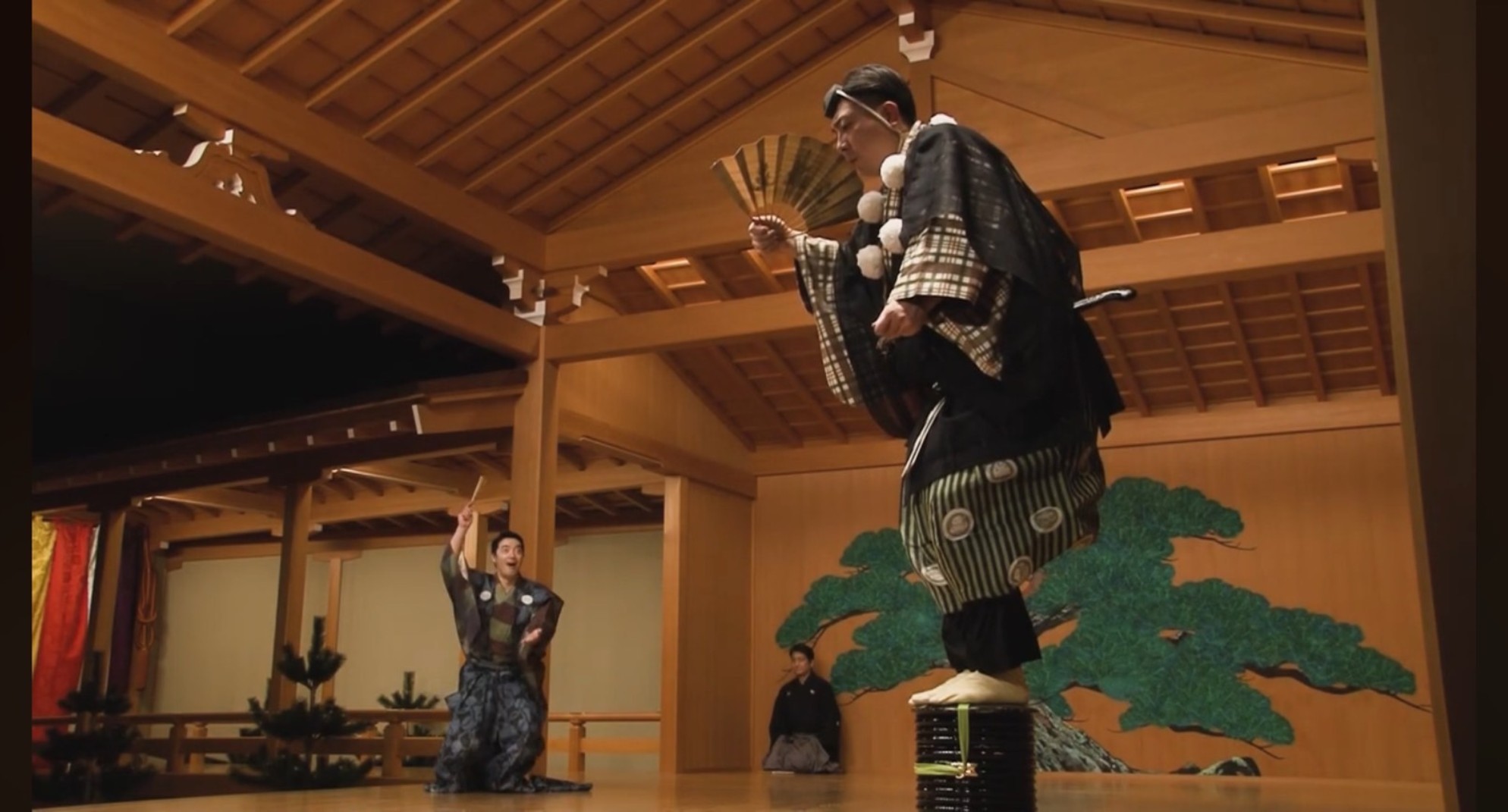
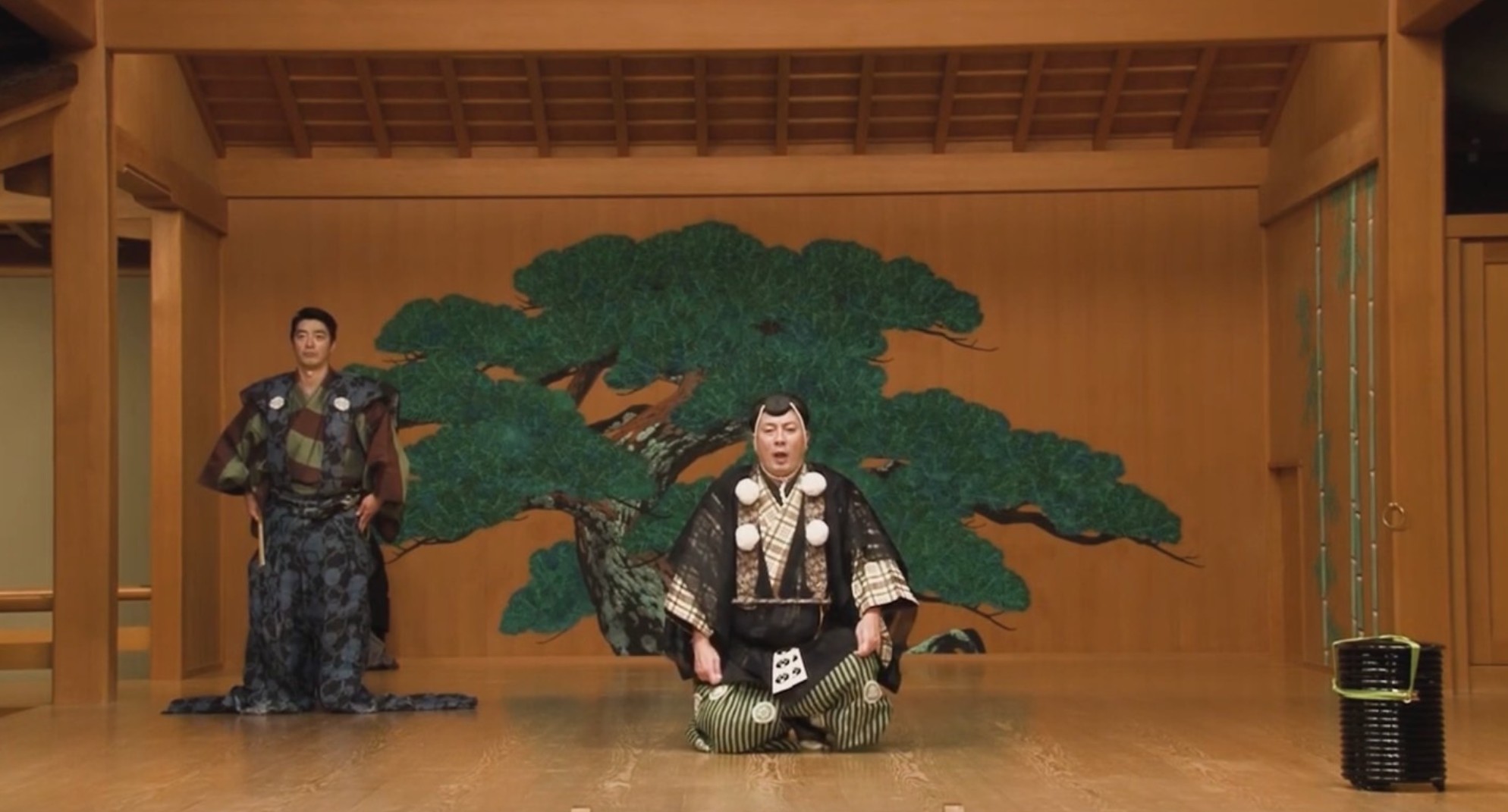
Kyōgen piece Neongyoku (The Song in Sleep)
On his way home from a drinking party, a master happens to pass by his servant Tarō Kanja’s house and hears him singing beautifully. The next day, the master orders Tarō Kanja to sing for him in person.
Tarō Kanja, worried that he will be asked to sing repeatedly from then on, lies and says that he cannot sing unless he has been drinking. The master, eager to hear the song, gives him some sake. Then Tarō Kanja claims that he cannot sing unless he rests his head on his wife’s lap. The master, wanting to hear the song at any cost, offers his own lap instead.
Reluctantly, Tarō Kanja begins to sing, but pretends that he can only sing while asleep and loses his voice when awake. However, after drinking too much, he gets carried away and mixes things up—he stays silent when resting on the master’s lap and starts singing after being woken up. Eventually, he even begins to dance while singing.
Rather than showing rebellion toward his master, Tarō Kanja’s behavior reflects a kind of playful affection, revealing a humorous and endearing bond between master and servant.
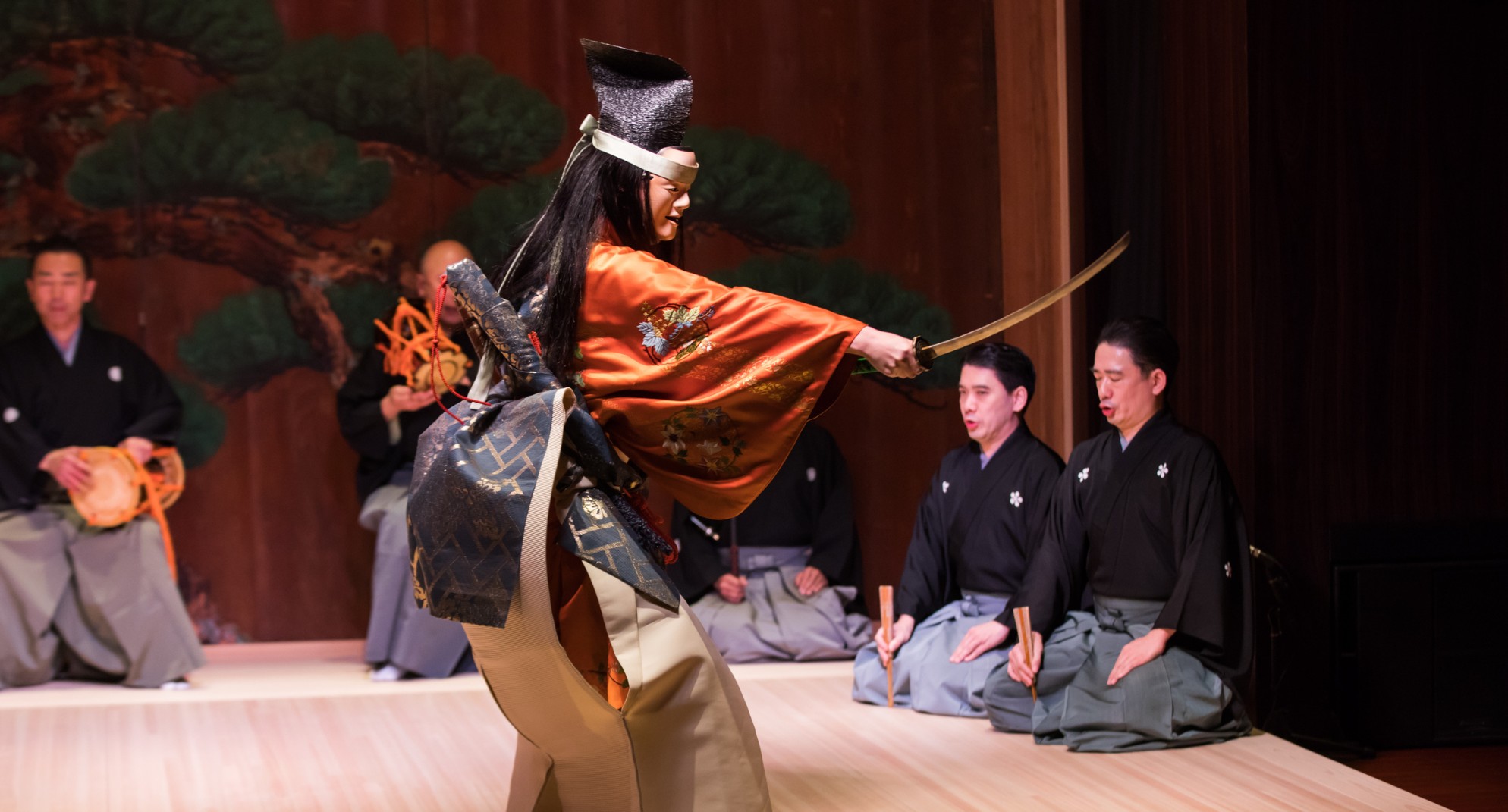
Noh “Atsumori”
Characters-
Shite: Taira no Atsumori
Waki: Renshō, formerly Kumagai Jirō Naozane
After slaying the young Taira warrior Atsumori in the Battle of Ichinotani, the Genji general Kumagai Naozane renounced the world and became a monk named Renshō. In deep repentance, he returns to the battlefield where Atsumori fell, to pray for the soul of the youth he once killed.
While offering prayers through the night, the ghost of Atsumori (Shite) appears, grateful that his former enemy now offers memorial rites. He recounts the sorrowful fall of the Taira clan: their exile from the capital, their desolate life in Suma, and the tragedy of their final defeat.
In a moving reenactment, Atsumori performs the courtly dance he once offered on the eve of battle, evoking the fleeting beauty of youth and nobility. He then relives the final moment of his life—his fateful duel with Naozane—and the audience witnesses the warrior’s tragic end.
Far from vengeance, the spirit entrusts Renshō with prayers for salvation, and then vanishes.
Among Noh plays centered on warrior spirits (shura-mono), Atsumori stands out for its grace and emotional depth. The youthful hero, said to have died at sixteen, is portrayed with the special mask Jūroku (“Sixteen”), capturing the fragility of a life cut short. The fact that the Waki is not a passing monk but the very man who killed him adds powerful dramatic resonance to the tale of grief, redemption, and transcendence.